
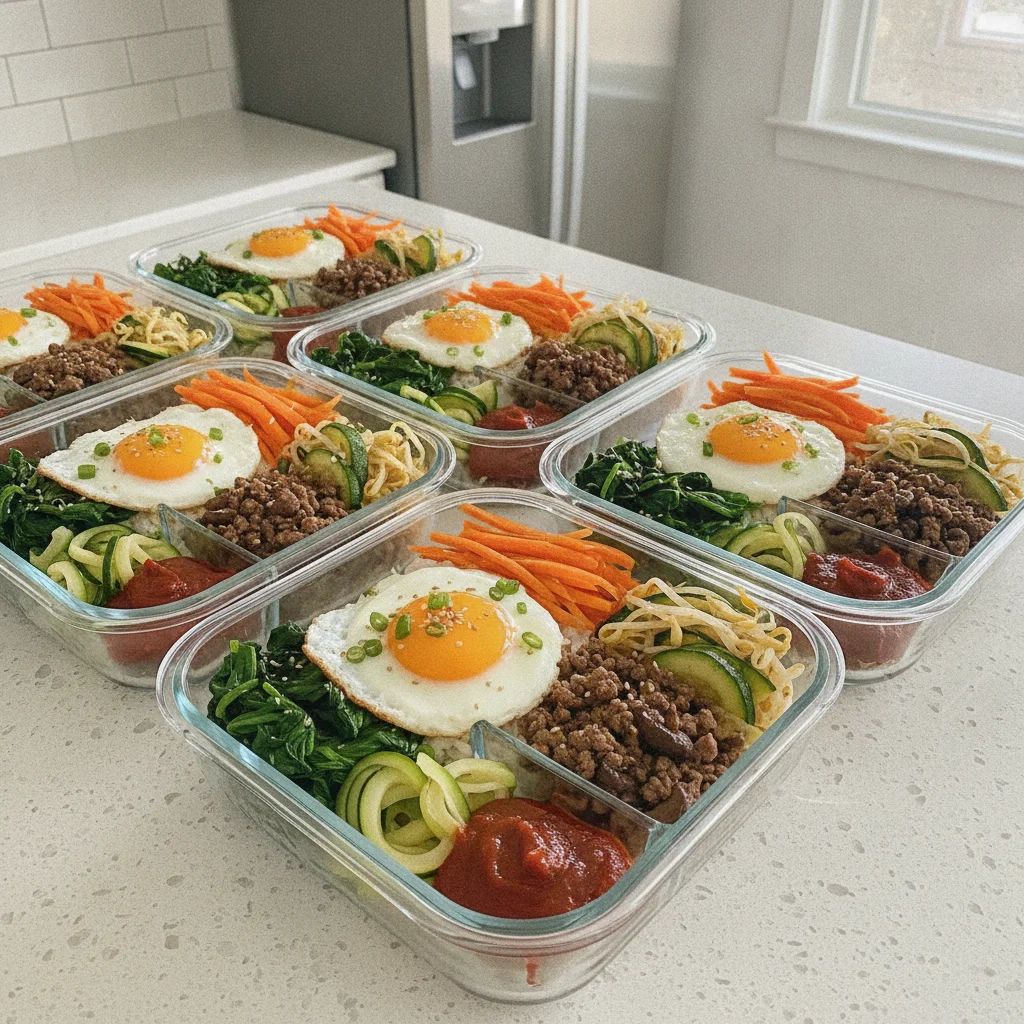
Whisk the gochujang, sesame oil, honey and rice vinegar into a smooth sauce; divide into 4 small lidded cups.
Serves 4
Ingredients
- 3 cups cooked short-grain rice
- 8 oz lean ground beef
- 2 tbsp soy sauce plus 1 tsp for vegetables
- 1 tbsp brown sugar
- 3 garlic cloves, minced
- 6 oz fresh spinach
- 2 carrots, julienned
- 2 cups soybean sprouts
- 1 zucchini, julienned
- 6 shiitake mushrooms, sliced
- 4 eggs, fried or soft-boiled
- 3 tbsp gochujang, 1 tbsp sesame oil, 1 tbsp honey, 1 tbsp rice vinegar
- Toasted sesame seeds
Instructions
- Whisk the gochujang, sesame oil, honey and rice vinegar into a smooth sauce; divide into 4 small lidded cups.
- Brown the ground beef with the garlic, 2 tbsp soy sauce and brown sugar until caramelized, about 6 minutes.
- Blanch the spinach and bean sprouts separately for 1 minute each, squeeze dry and season each with a drop of sesame oil, soy sauce and salt.
- Sauté the carrots, then the zucchini, then the mushrooms, each for 2 to 3 minutes in a lightly oiled pan so the colors stay separate.
- Divide the rice among 4 containers and arrange the vegetables and beef in neat sections on top, finishing with sesame seeds.
- Fry or soft-boil the eggs; add them the same morning or pack soft-boiled eggs whole in the shell.
- Refrigerate up to 4 days. Reheat 90 seconds, then stir in the sauce just before eating.
- Bibimbap literally means mixed rice, and it began as a way to use up the banchan side dishes already on hand. Cooking each topping in one pan in quick succession makes it an ideal Sunday prep for a week of bright, balanced lunches.
Nutrition (estimated, per serving)
- Calories: 520 kcal
- Protein: 27g
- Fat: 16g
- Carbohydrates: 66g
- Fiber: 5g
- Sugar: 12g
- Sodium: 980mg
No comments
Post a Comment