
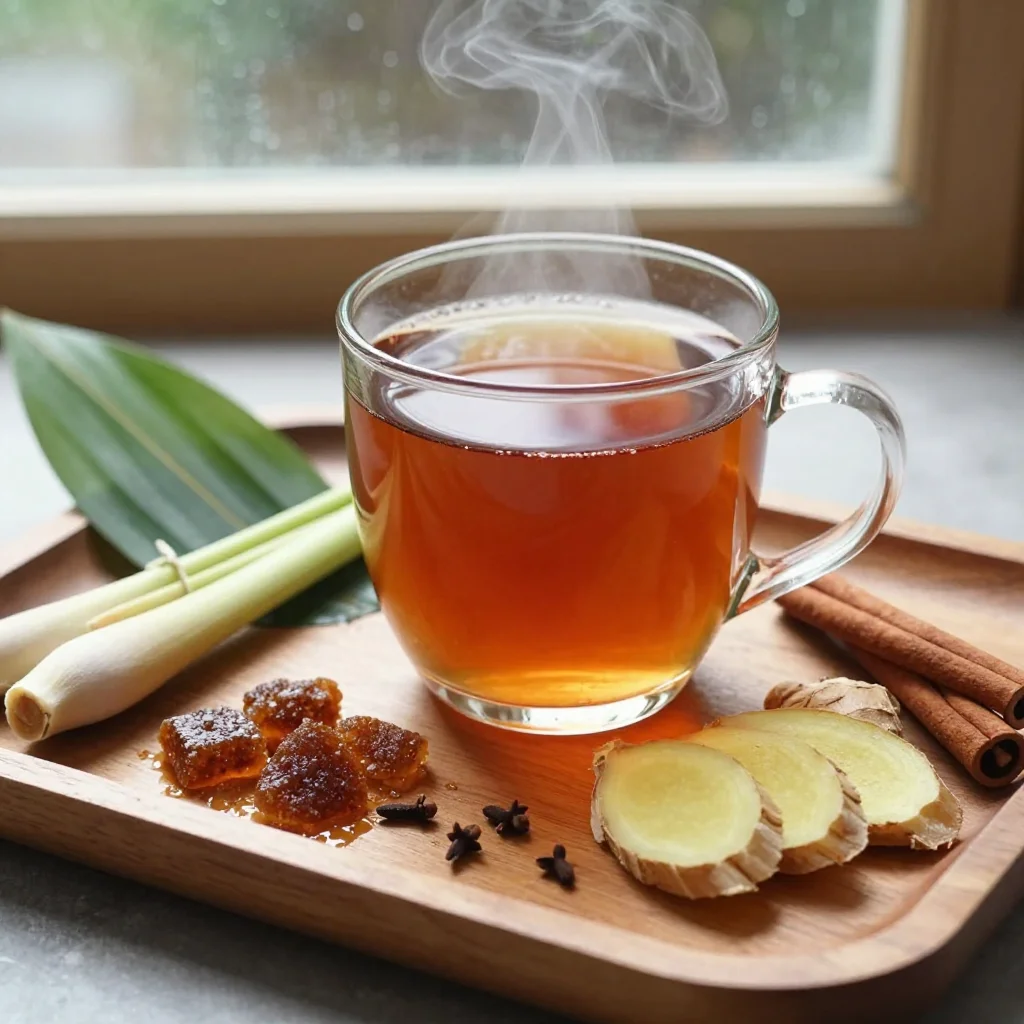
Scrub the ginger well but do not peel it; the skin holds a lot of flavor. Slice it into thin coins, then smash each coin with the flat of a knife to release the juices.
Serves 4
Ingredients
- 6 ounces fresh ginger (a large hand), unpeeled
- 5 cups water
- 3 ounces palm sugar (gula jawa) or dark brown sugar, roughly chopped
- 2 lemongrass stalks, trimmed and bruised with the back of a knife
- 2 pandan leaves, tied in a knot (optional)
- 1 cinnamon stick
- 3 whole cloves
- Pinch of salt
- 2 tablespoons roasted peanuts, roughly crushed (optional, Javanese style)
- Honey or extra sugar, to taste
Instructions
- Scrub the ginger well but do not peel it; the skin holds a lot of flavor. Slice it into thin coins, then smash each coin with the flat of a knife to release the juices.
- Place a dry skillet over medium-high heat and char the ginger slices for 3 to 4 minutes, turning once, until the edges blister and smell toasty. This roasting step is what separates wedang jahe from plain ginger tea.
- Put the charred ginger in a saucepan with the water, palm sugar, lemongrass, pandan, cinnamon stick, cloves and salt.
- Bring to a boil, then reduce to a steady simmer and cook uncovered for 20 minutes, until the liquid is deep amber and the kitchen smells of ginger and caramel. Simmer longer for a spicier, more concentrated drink.
- Taste and add honey or more sugar if you like it sweeter; it should be sweet enough to balance the ginger heat but not syrupy.
- Strain through a fine sieve into a warmed teapot or straight into cups.
- If serving Javanese style, drop a spoonful of crushed roasted peanuts into each cup.
- Serve piping hot in small glasses, with a slice of fresh ginger or a small piece of lemongrass as a stirrer. Leftovers keep for 3 days in the refrigerator and reheat gently without losing their punch.
- Wedang jahe is the drink of Java's cool highland evenings and rainy-season afternoons, sold by street vendors who keep a pot steaming over coals late into the night. Wedang simply means a hot drink, and jahe is ginger; the palm sugar, lemongrass and pandan give it the layered, floral sweetness that sets it apart from ginger teas elsewhere in Asia. Indonesians reach for it to ward off colds and to warm up after a soaking, which is exactly why it belongs on an autumn table far from Java, when the first cold rain of the season arrives.
Nutrition (estimated, per serving)
- Calories: 95 kcal
- Protein: 1g
- Fat: 0g
- Carbohydrates: 24g
- Fiber: 0g
- Sugar: 22g
- Sodium: 40mg
No comments
Post a Comment