
Whisk the flour, 1/3 cup sugar, baking powder, mixed spice and salt together in a large bowl.
Serves 6 (about 18 cakes)
Ingredients
- 2 cups (250 g) all-purpose flour, plus extra for rolling
- 1/3 cup (70 g) caster or granulated sugar, plus 3 tablespoons for dusting
- 1 1/2 teaspoons baking powder
- 1/2 teaspoon ground mixed spice or 1/4 teaspoon each cinnamon and nutmeg
- 1/4 teaspoon fine salt
- 7 tablespoons (100 g) cold salted butter, cubed
- 2 tablespoons (25 g) cold lard or extra butter, cubed
- 3/4 cup (100 g) dried currants
- 1 large egg, lightly beaten
- 2 to 3 tablespoons whole milk
- 1 teaspoon ground cinnamon, for the sugar dusting
- Butter, for greasing the griddle
Instructions
- Whisk the flour, 1/3 cup sugar, baking powder, mixed spice and salt together in a large bowl.
- Add the cold butter and lard and rub them in with your fingertips until the mixture looks like fine breadcrumbs with a few pea-sized flecks remaining.
- Stir in the currants, then add the beaten egg and 2 tablespoons milk. Mix with a knife, then your hands, into a firm dough; add the last tablespoon of milk only if the dough will not come together. Do not overwork it.
- On a lightly floured surface roll the dough out to about 1/4 inch (6 mm) thick. Stamp out rounds with a 2 1/2-inch (6 cm) fluted cutter, re-rolling the scraps once.
- Heat a heavy cast-iron griddle or skillet over medium-low heat and grease it very lightly with butter. The surface should be hot enough that a pinch of flour sizzles gently but does not scorch.
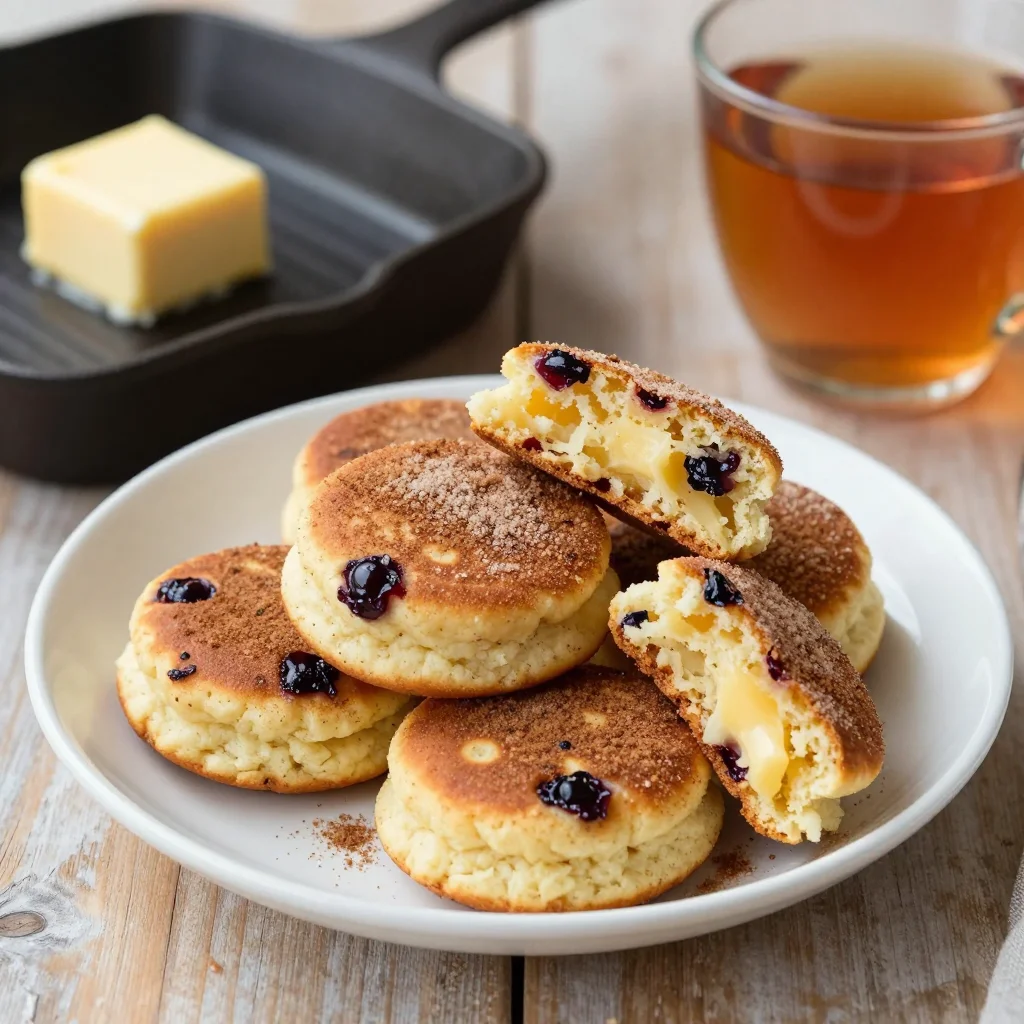
- Cook the cakes in batches for about 3 minutes per side until deep golden and risen, lowering the heat if they brown too fast; they should feel just set in the middle.
- Mix the remaining 3 tablespoons sugar with the cinnamon. Transfer the hot cakes to a rack and toss them in the cinnamon sugar while still warm so it clings.
- Serve warm with salted butter and a pot of strong tea, or cool completely and store in an airtight tin for up to 4 days; they revive beautifully with 20 seconds on the griddle.
- Welsh cakes, or pice ar y maen (cakes on the stone), were cooked on a bakestone over the kitchen fire in Welsh farmhouses and miners' cottages long before most homes had ovens, and they were tucked into lunch tins as a sweet reward after a cold morning's work. Halfway between a scone and a cookie, they need no proving and no oven, which makes them an easy autumn breakfast when the kitchen is chilly and the griddle is already warming for the day.
Nutrition (estimated, per serving)
- Calories: 290 kcal
- Protein: 4g
- Fat: 13g
- Carbohydrates: 40g
- Fiber: 2g
- Sugar: 17g
- Sodium: 210mg
No comments
Post a Comment